


ZZ Top bassist Dusty Hill has died at 72
'We will miss your steady presence, your good nature, and your unwavering commitment to providing that monumental bass for ZZ Top,' said Billy Gibbons and Frank Beard's bandmates about Dusty Hill. 'We will miss you dearly, amigo.'
By Dimitris (Bari) Polyzois
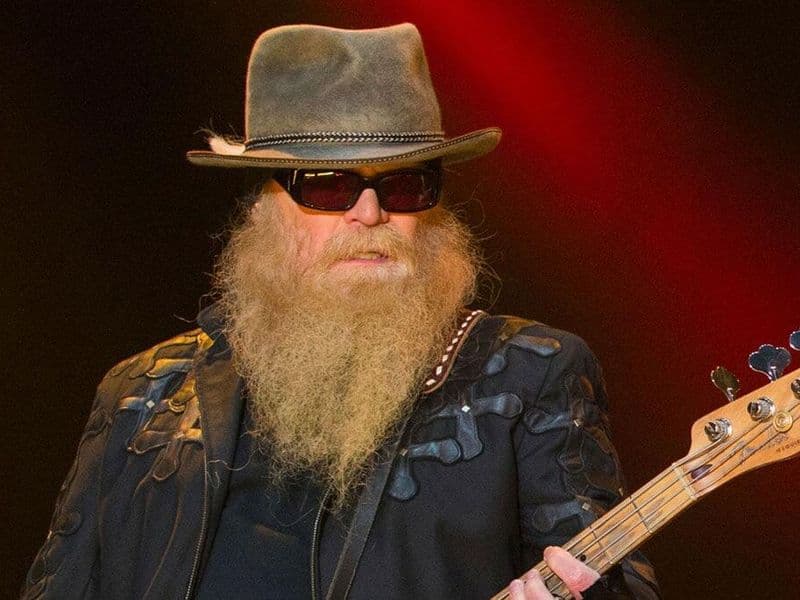
The bassist of ZZ Top, Dusty Hill, who played with the Texas blues-rock trio for more than 50 years, died on Tuesday 29/07/21 at the age of 72.
‘We are saddened by today's news that our bandmate, Dusty Hill, passed away in his sleep at his home in Houston, Texas', the surviving members said in a statement Billy Gibbons and Frank Beard. ‘For us, and together with legions of fans of ZZ Top around the world, we will miss your steady presence, your good nature, and your unwavering commitment to providing that monumental bass for Top. We will forever be linked by that "Blues Shuffle in C." We will miss you dearly, amigo'.
The John Fogerty of Creedence Clearwater Revival wrote his own remembrance: 'We are devastated to hear about Dusty's passing. We are so blessed to have shared the stage with the great Dusty and ZZ Top so many times, and if that wasn't rock & roll heaven, I don't know what is. The show we did together last week would be his last. So heartbreaking.’

Hill wasn't the original bassist of ZZ Top. He joined shortly before their debut LP, the first ZZ Top album, came out in 1971. He remained a pivotal part of the band through their most recent albums and tours. Throughout that whole time, the lineup stayed just Hill, Gibbons and Beard, making them one of the most stable outfits in rock history.
'It's a cliché and it sounds so simplistic, but it comes down to the three of us really enjoying playing together,' Hill explained in 2010.
'We still love it and we cherish the moment we're all together on stage. We also have enough in common to keep a bond between us, but enough differences to keep our individuality. And after all this time, we all know what makes the others tick and what makes them the people they are.'
The beginning of Duster The Dust The Dustbunny
Hill grew up in Dallas, Texas and started playing bass at 13. 'Most bassists are guitarists first,' he told writer Gary Graff in 2016. 'I wasn't. I was a singer. One day I came home from school and there was a bass. Then, I played in a bar that same night. It wasn't very good, but I learned how to play on stage. Embarrassment is a great motivator.’
He joined ZZ Top right after signing a deal with London Records. The first records ZZ Top's First Album and Rio Grande Mud failed to generate much traction, but they finally connected in 1973 with Tres Hombres thanks to the hit single "La Grange". The same year, they opened for the Rolling Stones in Hawaii. 'People would look at us onstage, their jaws would drop and they'd grumble.', Hill told Rolling Stone in 1974. 'In the end, though, we won them over and they were shouting for us to come back. It felt kind of funny with the Stones watching us from behind, waiting for us to finish.'
'I just wanted to feel normal'

The next few albums weren't as successful and the band took a three-year break after the release of Tejas in 1976, during which Hill took a job at Dallas/Fort Worth International Airport. 'I just wanted to feel normal', Hill said in 2019. 'I didn't want other people thinking I thought I was hot stuff. Most of all, I didn't want to start feeling that way myself. So I did it to stay grounded.'
During ZZ Top's hiatus, Hill and Gibbons grew long beards. And when they resurfaced in 1979 with Degüello, they scored a massive hit with "Cheap Sunglasses". But it was Eliminator from 1983 that turned ZZ Top into MTV superstars. The singles "Sharp Dressed Man“, “Gimme All Your Lovin '" and "Legs" were inescapable and remain classic rock radio staples to this day. And although their success began fading in the '90s, the band never stopped touring and always kept a massive following. They were inducted into the Rock & Roll Hall of Fame in 2004 by Keith Richards.
You've got to go through the low points to appreciate the high ones in life.'
Hill remained a quiet presence throughout it all, rarely giving interviews and letting Gibbons serve as the band's spearhead. When he did speak to the press, he hinted at a darkness few fans ever saw. 'There have been dark spots in my life, but I never discuss them publicly.', he said in 2010. 'It's not for the public to pick apart and analyze. All I'll say is you have to have the right attitude toward those downfalls. You've got to go through the low points to appreciate the high ones in life.'
In recent years, Hill underwent hip replacement surgery and a shoulder injury. The band was forced to cancel some shows and played with a fill-in earlier this month, when Hill had to return to Texas to deal with the hip problem.
While his cause of death is unknown, he said in 2010 what he'd like to see written on his tombstone. 'It might sound gross, but you never get any younger', he said. 'I've come up with a few ideas and then scrapped them all. There's an inscription on a wooden marker over a grave in Boot Hill that says: Here lies Lester Moore. Four slugs from a .44. No Les. No more. I like the humor in that.'