

Stephen Malkmus on how to be a useful human being
The patron saint of indie rock, Stephen Malkmus, talks about his fear of Twitter, cooking Carbonara, his kids, and why he thought about asking Lorde to sing on his upcoming album, Sparkle Hard.
By Dimitris (Bari) Polyzois
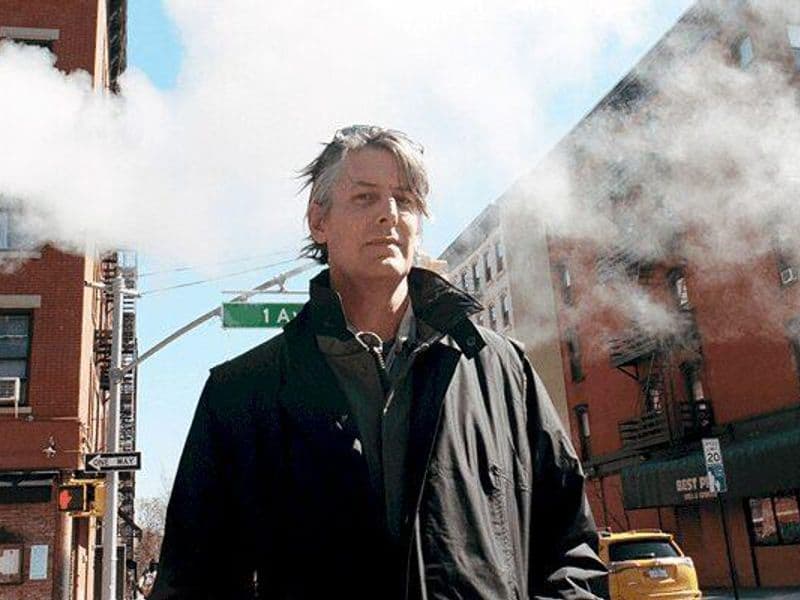
Over the last 30 years, Stephen Malkmus has built an indie-rock archetype, cultivating loyal followers far removed from the hits of the mainstream charts. So it's a bit strange when the 51-year-old tells me he's soon headed to Los Angeles to try his hand at writing songs with a team that works with big pop acts. Sitting at Manhattan's Bowery Hotel, the laid-back singer even looks a little excited when I ask what he'd think if someone like Katy Perry ended up singing his lyrics. "Katy Perry Sparkles Hard!"
It's a bit strange when 51-year-old Stephen Malkmus headed to Los Angeles to try his hand at writing songs with a team that works with big pop acts
Half the joke is a nod to his latest LP, Sparkle Hard, which doesn't sound anything like Katy Perry at all. It's more in line with the dazzling wordplay he's known for, and Pavement fans will be pleased that some of the songs, including the first single "Middle America." But the album isn't just recycled goods. Throughout, you can hear Malkmus playfully toying with fresh techniques – gussying up his voice with Auto-Tune, working the Mellotron, and drowning strings and duetting with Kim Gordon – adding a bit of drama even to his most typical style.
Although his lyrics have always been distrustful and a little labored, often commenting on the absurdity and irony of life and fame, on some parts of his new album he seems to be carving into culture with a particularly sharp scalpel. One track even finds him directly commenting on the myopic politics of the lifestyle of gentrified cities like Portland, where he lives with his wife and two daughters.
Although his lyrics have always been distrustful and a little labored, often commenting on the absurdity and irony of life and fame, on some parts of his new album he seems to be carving into culture with a particularly sharp scalpel
Regardless of the lack of a chart-topping No 1 hit (so far), Stephen Malkmus's influence is firmly established in contemporary culture. He notes that current acts like Kurt Vile and Courtney Barnett "mean something real and homespun," the way Pavement once did. Malkmus, a fairly avid tweeter, also agrees that his brand of tight songwriting is a kind of prediction of how we all communicate now, namely through wretched social media messages. "It's like bad tweets that only five people would love," he says of his lyrics.
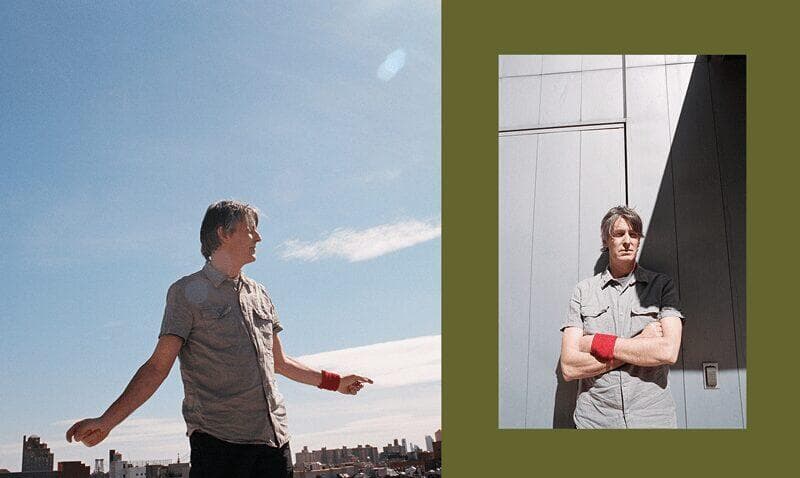
Perhaps, too, the spirit of the times demands a sharp voice like Stephen Malkmus's. A bit of wit can help us make sense of the often ridiculous climate of the era, in which logic doesn't seem to make sense or function. Wearing a jacket, t-shirt and shoes in three shades of grey that all match his hair, Malkmus is energetic, self-aware and discreet throughout our conversation, commenting on everything from the state of capitalism to the careers of pop stars. A conversation with him about music inevitably becomes a conversation about everything.
What does success mean to Stephen Malkmus the artist? Has it changed over the years?
First of all, it's all quite simple: if you're going to go on tour, you want to have your own wardrobe and your own hotel room. That's a form of success too. Then, you also want your friends to like your music. There's a whole issue of satisfaction, which requires you to have done a good job.
From the outside, it seems like I never cared about other people's opinions of my music.
To a fault, maybe. [laughs] In the early days, and with some of the first Jicks records, there was no feedback from anyone. We'd just hand out the records and labels would say, "This is nice." But now I'm a bit more interested in getting feedback from regular people. Which songs do you like? Does the message land? Maybe I have an idea I like, but do you like it? How can it carry more meaning? In recent years, I've been a bit more open.
From the outside, it seems like I never cared about other people's opinions of my music.
On the new album, it seems like you're more aware of the world around you. On "Bike Lane," you contrast the obsession of a privileged person with niche politics – whether or not a bike lane has been built – with matters of life and death politics. The kind most people in the world face. The symbolism is heavy and mostly draws from a reference to Freddie Gray.
We spend a lot of energy on lifestyle, and that's fine. You want to perfect your lifestyle. I get it. My typical, middle-class audience really worries about where they live – isn't that a crisis, after all? – and there's a lot of energy spent on things like bike lanes. It's very passionate stuff. But like all of us, I worried that I'm watching things happen far away from where I live.
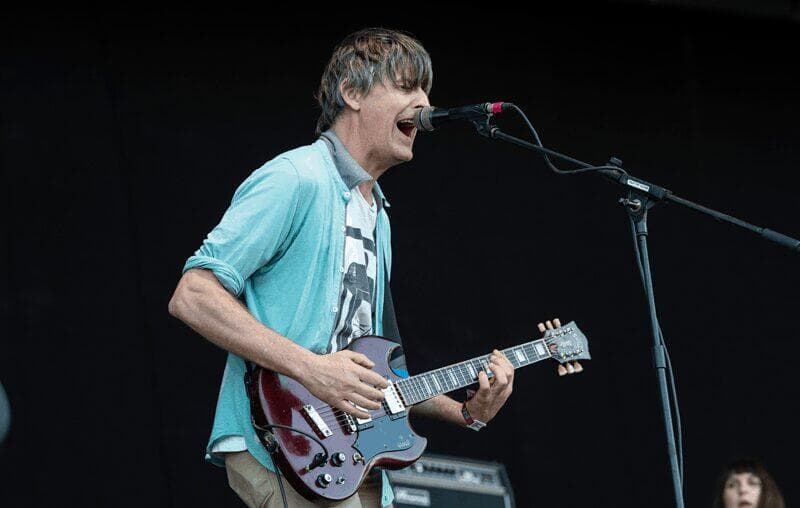
The song starts out like Queens of the Stone Age on Xanax, and then turns into glam, like the Clash or something. In my head, I was singing like the Ramones.
It's totally dark, like cops and robbers. So you have two things that don't cohere. Two worlds that are completely different. In the real world, the outlaw is on the margins.
When you see so much discord all over the world, can Portland feel like a conscious retreat from the real world?
I think everyone has their eyes on the world of the internet, where all this stuff happens. It almost doesn't matter where you are. When you hear about what happened at Charlie Hebdo, it doesn't matter that you don't live in Paris. It's just hard to accept.
The news is unavoidable. Are you on Twitter all day?
No, but more than I should be. It's replaced print media for me. It's really such a great opportunity for me to connect with like-minded people to see what's going on. Weird friends – who might be bots – with their strange names and their neoliberal and neurotic feelings. It scares me sometimes.
Do your two daughters, growing up in this strange time, change what you want to achieve in the world?
In this achievement-based way of life, most of us have specific boxes we check to make ourselves useful people. But a lot of what you do as a parent is kind of invisible. There's so much you accomplish – just getting dinner on the table – that's worth more than making a song.
Do you think this album is political in a way the previous ones weren't? Does Stephen Malkmus's music have political elements?
Not really. I've always done stuff like that. In an interview with Green Day, Billie Joe [Armstrong] will talk for three paragraphs about what's wrong with Trump. It's so boring. We all know it already. I just skip that narrative. I'd be more interested in talking as an average person about capitalism and the despair of the times.
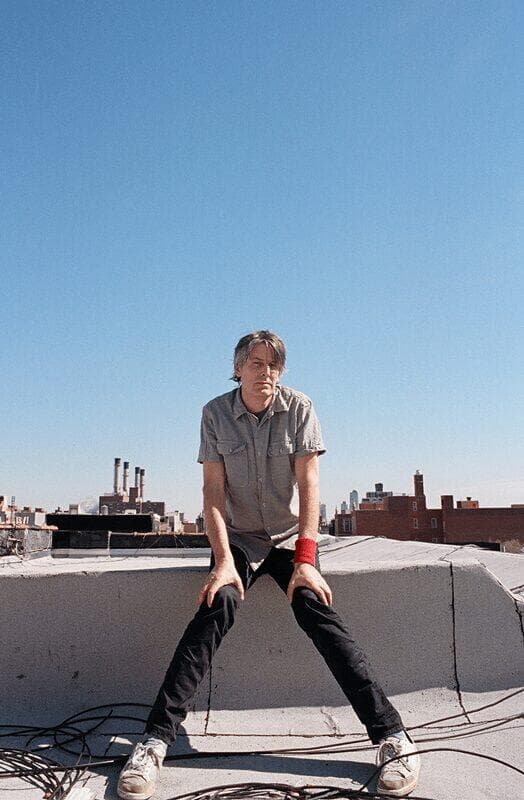
Do you think things are worse for young people now than when you were young?
I don't know for sure, but I think it's worse now, if you look at the numbers. In terms of natural resources and things, maybe there were more opportunities for advancement back then. Maybe things are a bit tighter these days, when it comes to finding ways to cope.
When I was growing up, it seemed like things were going wrong when there was Nixon or the gas crisis. Generally when there was some old guy somewhere, in some room, doing things to consolidate his power. Pushing a few hardworking American buttons. Now we see it's all this interest, which is really menacing and dark.
I wonder if the times reflect the '90s for young people in some way. You, as Stephen Malkmus, called them slackers, and now my generation, millennials, are accused by their parents of freeloading.
I read Malcolm Harris's book [Kids These Days] about how your generation was well-trained, educated, and fully prepared for "the job" – and it was never there. I felt like I had a bleak employment outlook in my day too, but according to statistics, there are fewer opportunities now and more anxiety. I'm noticing less drinking now and more Xanax, snacks, and weed. Just low-key. Everyone's a little high.
Do you smoke weed?
No. I don't vape or anything. [Stephen Malkmus says, laughing]
There's a very strange and amazing moment on the track "Refute," where Kim Gordon sings about a summer camp that might make some people think of her recent divorce from Thurston Moore.
I wrote that song. It's a country song, and in my head I was in some rustic field – I'm picturing tight jeans and trucks – filtering it through something more modern. Kim's a friend, and as soon as she heard it she told me, "I think the lyrics are funny. I'll do it." She did a really great job.
Do you worry about what Thurston, who's also your friend, might have thought?
No, because I thought it was funny. I like it too. I don't judge anyone. Who knows what goes on behind closed doors in people's relationships? We all know it's not easy. I guess there are stories like the Cinderella one, but from my experience the basic ingredients are therapy and talking and growth.
But I thought that if Kim couldn't do it, I'd ask Lorde to do it, because I thought Lorde owed me a favor.
For what?
I did something for her. I don't want to say what favor I did for her.
But you can't tell me what it was?
Not really. It wasn't a big deal. It's not very exciting. Apparently it wasn't big enough to get her to actually sing. Maybe her parents are Pavement fans or something, so I'm still hoping.
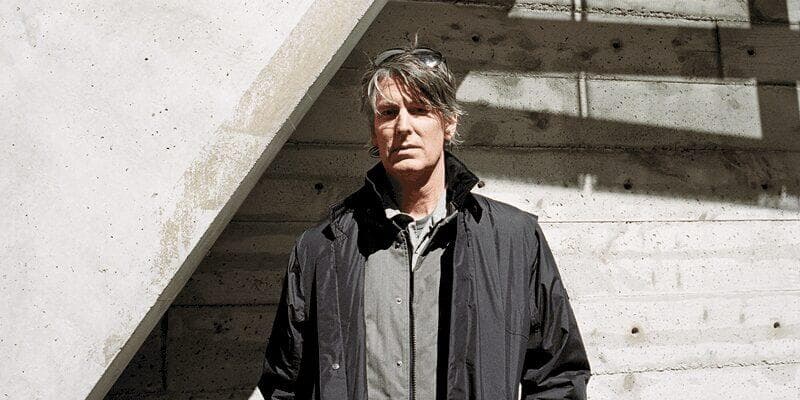
You've managed to sustain a music career that pays the bills for a long time. Could we say Stephen Malkmus is a smart businessman?
Barely. With Pavement, we never had managers and we never had a lawyer. We're lucky we didn't sign any bad deals. But I'm not even sure that [the kind of career Pavement had] can exist for artists after the internet. We got a bit of a benefit from people who actually bought records. You have to hustle more now and everything's so transparent with data, like exactly how popular you are.
I think there's money out there. Bands like Arcade Fire and LCD Soundsystem signed to Columbia and they wouldn't have done that unless someone was giving them a lot of money. Or at least betting on them. There's money out there, I just don't know exactly how you get access to it.
You've never had to have a real 9-to-5 job. After 25 years basically as a freelancer, what does an average Tuesday look like for you?
A lot of work – no allocation, not a lot of dollars. Everything's about the kids. They go to school at nine and I pick them up at 2:30. I put food on the table. Carbonara – they love it. We call it "breakfast pasta." I'm good at cooking and putting things on the table and keeping the chaos to a minimum. There's an art to it. Also, my wife [Jessica Jackson Hutchins] is an artist, and a few years ago we spent some time in Berlin mainly to focus on her career. When we were there we'd go out, I'd go to clubs, we'd write music, but I wasn't so focused on work.
Since you lived in Berlin, do you like techno?
Yes, unfortunately. [Stephen Malkmus laughs here] I'm only a techno fan in the party-animal sense. If you're a little twisted, you can really find meaning in it.
Would you go out to clubs?
I would, but I'd have to go to the ones for 30-and-over crowds.
Do Stephen Malkmus's kids like the new album?
They don't like it that much.
What do they like?
We heard a First Aid Kit song, and my daughter really liked it. She likes SZA. She liked Taylor Swift, but was disappointed with the new album. I wouldn't have imagined it was as bad as she says. The problem is that she [Swift] got so big that people can't invest in the songs. She lost that slightly invisible thing. Lana Del Rey did a really good job, and people got to project their imagination onto her in a particular way. The same kind of thing worked for Cat Power and Kurt Vile too. They don't do it on purpose, but it's a bit mysterious. You can hear it and go, "Oh, I see what they mean."
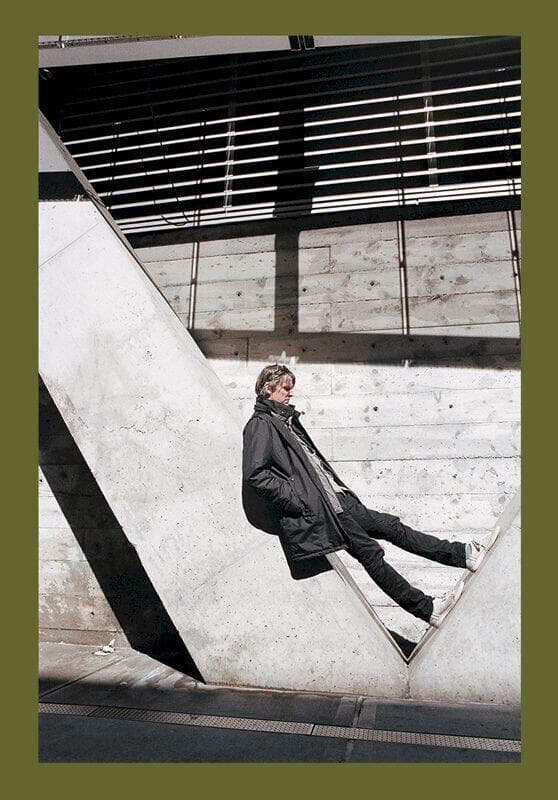
Mark E. Smith of the Fall died recently. Was he as big an influence on Stephen Malkmus as critics often claim?
I didn't like the Fall as much as a lot of my friends did, but I definitely thought Mark was really good, and one of our albums, Slanted and Enchanted, has three or four songs that fit perfectly with the way he did things. I never denied it – I've never denied the ideas I've borrowed. They always come out through a prism of my own.
What was it about bands like the Fall that inspired you?
We're interested in bands that are tough. That really speak to a younger, insecure person. They come from punk and look for someone to boost their self-esteem, like the Velvet Underground. I guess it's an attitude. Either way, it's a badass attitude.
Do you have an attitude?
I think I do.
What do you think your attitude is?
I want to be fresh and cool. Although of course people also call me a nerd all the time.
Actually, in the '90s, I always felt there was a cult of elitism and loyalty around Pavement and their fans, like they were sitting at the cool kids' table. Sometimes it was alienating, to be honest.
I think Pavement had the trait of being like a New York band. We were never going to be a band for the masses, like Oasis or something. I might even like an Alice in Chains song and go, "That's good."
At this point, do you feel consciously like you're trying to please a devoted audience of Stephen Malkmus fans?
I don't really think about the audience, but I'm grateful there are still the same people who'll buy your record. Sometimes don't you feel like you're shouting into the void? Will anyone pick up the signal? On the radio, that's not going to happen. I think it's good to show you have influence over the game, like, "Oh, I want to watch and listen to this" instead of "I'm just putting it out there."
With everything revolving around culture and politics, a bit of wit and satire from Stephen Malkmus is necessary, right?
That's good. We came from an era with a slightly cynical edge. In the '90s, cynicism was kind of new. I think today it's extra cynical. Cynicism is just taken for granted and isn't really dark but gets externalized. It's just the way the world is and people play along with it. Maybe that's what works with Pavement, because we didn't take it that seriously. We respect people's intelligence or something. I still want to enjoy my life. I'm still glad to be alive right now.