



Fire And Water: The masterpiece of Free
A retrospective on Free's iconic album, Fire And Water. "We had the whole world in the palm of our hands in 1970. That's what it felt like," says Free drummer Simon Kirke. "And we let it slip away."
By Dimitris (Bari) Polyzois
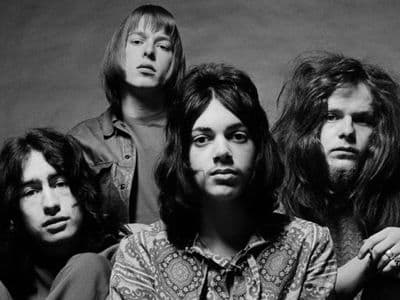
That was the feeling that making Fire And Water left the band with.
For those whose memories run longer than our hair does these days, 1970 was a time when all the clocks had stopped. After the technical explosion of Sgt Pepper and everything that followed, it felt like someone had turned the colour down. It wasn't just the television that was black and white, it was everything. Politicians, football, fashions, even the sky. It had been smudged, since there was still a thick tar of burnt coal and cigarette smoke about. In the UK, at least.
The only place where anything new and truly colourful was happening was in music. But even there the clock seemed to have stopped. The big event of the summer was the third Isle of Wight festival. It took place in August 1970 with Jimi Hendrix, The Doors, The Who and a relatively new British blues rock band called Free topping the bill. Though unknowns at first, Free were then enjoying the summer's big rock hit with the single All Right Now. A track taken from their wonderful third album Fire And Water.
"We'd just managed to have our first hit," recalled bassist and co-founder Andy Fraser. "Suddenly we found ourselves on the same bill as all these superstars. We knew how good we were. In our day we didn't need to be afraid of anyone."
A month later Hendrix was dead, and six weeks after that Morrison had given his last performance with The Doors. The Beatles had also officially announced their
The only place where anything new and truly colourful was happening was in music.
split that year, and Janis Joplin and Brian Jones had long since been laid in their graves. Free, for their part, struggled to follow up their masterpiece. Fire And Water had initially offered so much promise for the future.
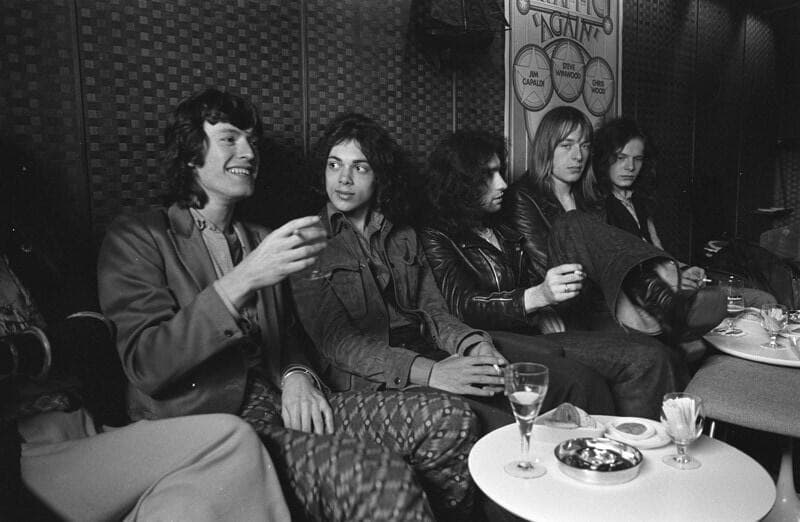
"We had the whole world in the palm of our hands in 1970. That's how it felt," underlined drummer Simon Kirke. "And we let it slip away."
It's true. They were improbably young, astonishingly talented, beautiful and emotionally unravelled. Yet if any blues rock band of the era had been born under a bad sign, it was surely Free. With Fire And Water they had created something beyond what Led Zeppelin were attempting. Not just a hit, but a work of such mature and gently balanced musical logic. They combined blues and soul and rock and funk in a way that was downright wise.
It was surely a dream of an album. But that was also the very moment things turned into a nightmare for Free. Fire And Water ought to be hailed today as one of the greatest albums of its era. Instead it's a footnote in the history books, overshadowed by its bigger single.
"It's a shame what happened to Free after Fire And Water," said Andy Fraser years later. "But the music will always be out there. It was built that way."
It surely was.
All Right Now stayed at No. 1 on the British chart.
Although All Right Now became the entry point into history for Free, it was actually the last track they recorded. Fire And Water itself was released in June 1970. At the same time, the single stayed at No. 1 on the British chart. The track was heavily boosted by radio DJ Mungo Jerry. "God, I hated Mungo Jerry," says Kirke, laughing. But Mungo Jerry was groundbreaking. Free, for their part, suddenly found themselves on the rock scene. With Fire And Water too, they reached No. 2.
"There's no doubt in my mind that Fire And Water was Free's high point," says Kirke. Now 65, the drummer was born in London but grew up in Shropshire. He still describes himself and Free singer Paul Rodgers as the band's 'country boys'. It's no accident that they were the ones who went on to form the far more commercially successful Bad Company.
Coming out of a gig and finding the pavement covered in phone numbers written in lipstick
"The other two had such huge musical talent," he says, referring to Fraser and guitarist Paul Kossoff. "But Paul and I had the strength and determination, I think. We were very happy about that."
"I wanted to reject Top Of The Pops. I just couldn't picture us on the same stage as some band like The Sweet," he noted. Kirke's take was this: "Coming out of a gig and finding the pavement covered in phone numbers written in lipstick. Our driver would
clean them off and write them down on a piece of paper. There were no mobile phones back then. You had to find a coin for the phone box. It was a wonderful moment. But that's also when everything started to fall apart."
"Andy and I started writing music together," says Rodgers. "Fire And Water was a song I wrote and Andy arranged. For Heavy Load, Andy came into the studio with the music, and I wrote the melody and lyrics in the studio. We shared writing credits on all the songs we created."
"Paul was very good with lyrics and crafted a vocal melody. We were Yin and Yang. When it worked, it worked spectacularly. But when it didn't…"
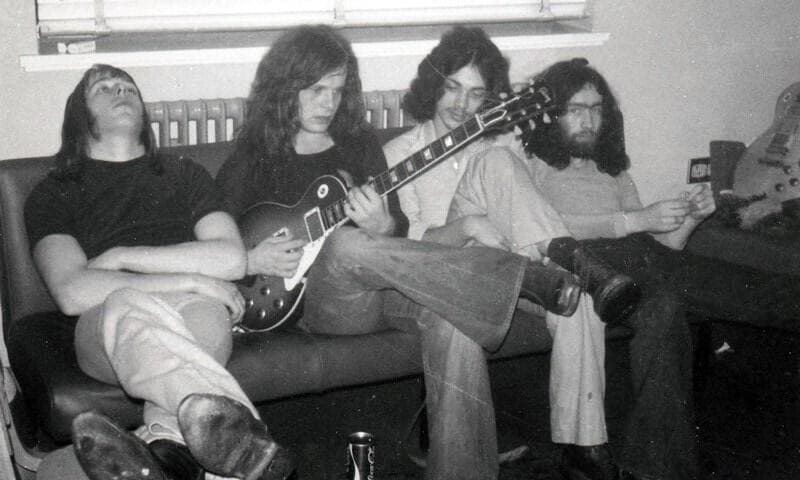
It was a groove machine.
Free didn't change the game the way the Beatles did, or blaze trails like the Rolling Stones. They didn't touch the divine like Hendrix, or forge their blues influences into supersonic forces like Led Zeppelin. Yet Free's music captured the atmosphere of the early 1970s like no other British band of the era.
Although Fire And Water was the band's third album, they'd only been together for 18 months when they recorded it. "It was always about making albums," Fraser told me.
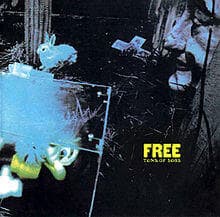
It was a groove machine. Listen to Fire And Water now and it's all there in the monumental title track. A magical blend of that slow-dance riff and frontman Paul Rodgers' voice, inducing a trancelike state.
Yet the music that sounds so effortless had come only from hard graft. Free's first album, Tons Of Sobs, was released in March 1969. On it they essentially recorded their live show.
Their second album, simply titled Free, came out just five months later. It was made in the same style. They recorded in ad hoc sessions between live dates.
When it came time to record their third album, Free made recordings at the newly opened Trident Studios in Soho and Island's Basing Street Studios in Notting Hill Gate. This time, though, Free were no longer humble beginners hoping for the best. Now they were ready to step up in the studio.
"By then we were learning to let the music breathe, how to follow the flow and let the music dictate its natural pace," Rodgers told me in 2006. "We'd become
Free didn't change the game the way the Beatles did, or blaze trails like the Rolling Stones. They didn't touch the divine like Hendrix, or forge their blues influences into supersonic forces like Led Zeppelin.
confident enough to let things happen organically. We were all immersed in the music."
The minute Chris Blackwell walked into the studio and heard it, he said, "That's a hit."
For most Free fans, All Right Now was where the vital fifth member first appeared in spectacular fashion. "The minute Chris Blackwell [head of Island Records] walked into the studio and heard it, he said, 'That's a hit,'" recalls Kirke.
All Right Now was probably the first truly post-modern song in rock. It was an admission of realism in a world still echoing to the sound of love. It was the catchiest riff I'd ever written.
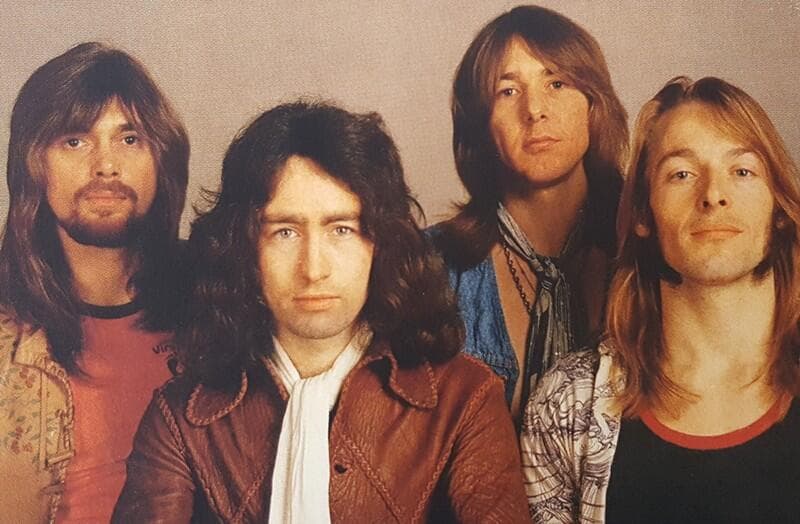
Blackwell insisted that for a radio edit they should cut the third verse and trim Paul Kossoff's guitar solo. "We have to admit it worked, in terms of turning it into something radio would play."
This is proven by the single's astonishing success, which reached No.1 in more than 20 countries, including topping the charts in America. There, it would be played on the radio over a million times over the next two decades. (Current 21st-century estimates put the figure at around 3 million.)
Blackwell insisted that for a radio edit they should cut the third verse and trim Paul Kossoff's guitar solo.
Despite this huge success, unlike most rock bands, Free never settled for a lowest-common-denominator audience. "Our attitude was: we don't play your game," explained Fraser. "We play our game. We'd listen to Led Zeppelin and Robert Plant would be wailing away and we'd think, 'Couldn't he come up with some lyrics?' We looked at Cream and Hendrix, we loved the Beatles. But we were mostly influenced by Black American performers like BB King and Aretha Franklin, Gladys Knight and Otis Redding. Those kinds of people were really what we were listening to."
That deep influence is felt throughout the album Fire And Water. While the heavy heartbeat driving their music comes through most clearly on tracks like Heavy Load. When Wilson Pickett covered Fire And Water, reaching No.2 on the US Billboard R&B chart in 1971, it vindicated Free's claim that skinny white boys couldn't sing the blues but still had plenty of soul power.
Seemingly Ironic
It's bitterly ironic, then, that the success of All Right Now seemed to rob the music of its freedom. "All Right Now was really an albatross," sighs Kirke. "What's that old Chinese saying: be careful what you wish for. And we got it. Suddenly, instead of playing a different city every night, we were playing a different country."
Tours across America, Japan, Australia and the landmark Isle of Wight appearance seemed to mark the rise of a band that was, in fact, in freefall. When they tried to come up with a logical follow-up to All Right Now, they simply couldn't do it. Their next single, The Stealer, which appeared on their fourth album, Highway, was a great song in its own right, but was an absolute flop.
"The pressure was going to come with a follow-up to All Right Now, and we just couldn't do it," says Kirke. "Then Andy and Paul figured we'd reached the end of our musical journey together. I'll never forget Koss's reaction. He collapsed like he'd been punched in the gut."
Free split up in early 1971, but it wasn't the end of the story. A year later they reformed, partly in an ultimately doomed effort to help Kossoff. The original lineup nearly finished recording one more album, Free At Last, in early 1972. But the good times had long since stopped happening. This is proven first by Fraser's departure, and later by Kossoff's grim descent into a drug-fuelled hell, right up to his premature grave three years later.
We'll remember them for the faded Fire And Water, branded as the album with All Right Now on it
Over the following 40 years, Free have come to be regarded as one of the defining bands of rock's adolescence. We'll remember them for the faded Fire And Water, branded as the album with All Right Now on it. A handful of Free fans, led among others by Joe Bonamassa, have kept the flame alive. In recent years there have been constant rumours of a reunion, mostly as part of the celebrations for the 2012 London Olympics. Sadly, Andy Fraser died on 16 March 2015, and with him vanished any last chance of his former band reclaiming its rightful place in the rock pantheon.
Andy Fraser, before his death, spoke with a mix of disappointment and frustration about his old band's unfulfilled promise. "After Fire And Water, I think we could have reached even higher," he said. "When I think of the Beatles, they weren't afraid to do anything. From silly songs like Yellow Submarine to Strawberry Fields Forever, which is an absolute classic. And I felt we had that capability too."
Ifs, buts, maybes… Too late now to do anything about it. It's all, in the end, dust in the wind. The only thing that matters is the music. Listen to Fire And Water now and what you hear isn't about 1970 at all. It's about the now, the after, and the future. It's about the timeless thing that happens when your soul is touched by beauty. By the sun and the moon. Yin and Yang. By fire and water. Free may have lost the legacy they truly deserved, but for the rest of us Fire And Water is alive. It's a magic portal to that place where it will always be all right now, baby.