



David Bowie: The story of Blackstar
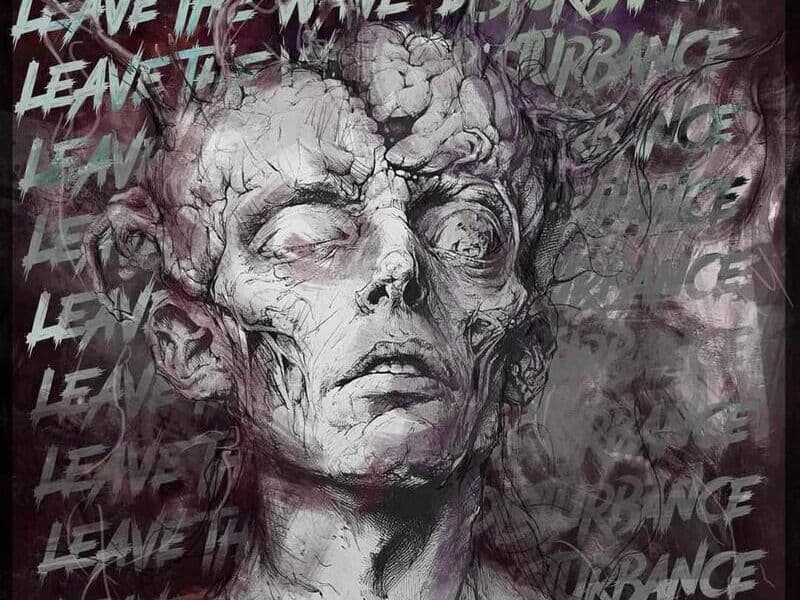
'Blackstar' was one of David Bowie's most significant works. Five years ago today (January 8), David Bowie stunned the world with his masterpiece "Blackstar."
By Dimitris (Bari) Polyzois

His fans only had two days to live with the record before it changed its meaning forever. Bowie's death changed forever the way we would see him. Up to that point, the wider world didn't know he was suffering from cancer. Despite his illness, the Starman spent his last year on earth working on what would become his final album, as well as the musical Lazarus.
When the curtain opened
While Bowie was in London in 2013 to visit the V&A's David Bowie Is exhibition, he called up his longtime friend and theatre and film producer Robert Fox with an ambitious new idea. A musical based on The Man Who Fell To Earth. It wouldn't be the first time Bowie had used the story in his work. Earlier, he had appeared in a film adaptation of the novel back in 1976.
Bowie wanted it to be called Lazarus. The show was to be based on the character Thomas Jerome Newton from The Man Who Fell To Earth. The writer, after much reading, was decided to be Enda Walsh.
Once they'd found a writer, director Ivo van Hove started working to bring Bowie's vision to life. Performances began in 2014. It was around the same time that 'Sue', which appeared on the compilation album 'Nothing Has Changed', started taking shape. And so began the work that would become synonymous with the final days of the genius.

Welcome to the 'Blackstar' band
Usually, Bowie trusted the same crew of reliable musicians to give shape to his work. "Blackstar" though saw him bring in a jazz ensemble to collaborate with him for the first time. Donny McCaslin, leader of the New York-based Donny McCaslin Group, came recommended by Maria Schneider. She was the musician Bowie collaborated with on the 2014 release of "Sue (Or In A Season Of Crime)".
So, after David listened to McCaslin's record called "Casting For Gravity," he decided to bring him into the group.
The birth of 'Blackstar'
Unbeknownst to the rest of the world, 2015 began with a lot of work for Bowie at The Magic Shop studio in New York. Together with McCaslin, pianist Jason Lindner, drummer Mark Giuliana, bassist Tim Lefebvre and his longtime producer Tony Visconti, "Blackstar" began to take shape.
The recording was split into three chunks. One week a month from January through March.
According to Donny McCaslin, that first day in the studio was a mix of excitement, anticipation and hope that everything would go smoothly.
That first day, Bowie tried to take the edge off their nerves. He told them not to worry about anything. First and foremost, it's about having fun. It was wonderful to see such an important musician offering reassurance and trust. It was the best possible creative environment.
Inspiration
During the second recording session in February, James Murphy of LCD Soundsystem joined the group. His work on Arcade Fire's "Reflektor" inspired Bowie to remix "Love Is Lost" on "The Next Day Extra."
Murphy's role was meant to be much bigger than it ended up being. Bowie and Visconti asked him to co-produce the record. James was wonderful during the sessions. Beyond being a fantastic musician, he was also a really fun guy.
Even before "Blackstar" was released, the central influence on it is often cited as Kendrick Lamar's "To Pimp A Butterfly." Bowie and Visconti played the record over and over, with the producer saying his friend's goal was to "avoid rock and roll"
He was so full of life and laughter, it was impossible to imagine anything was wrong with him.
This record was built on the listening habits of the entire band of musicians. That's why it has so many different styles. Even the language used was particular. Large parts came from very old British slang. After all, it would be really strange to hear David Bowie singing in today's language. David is bound to that British thread.
The first clue
«Look up here, man / I'm in heaven». That was the lyric Bowie sang in "Lazarus." The track appeared both on "Blackstar" and in the musical that shared its name. The song is loaded with all sorts of hints about the legend's health issues.
There's been a lot of discussion about whether Bowie identified with the character of Newton. Also, to what extent the story bled into his life and his illness, and how much all of that shaped his work at that time. It wasn't the first time he'd had health scares. Personally, I think his own mortality was very much on his mind. And that shows in the music video for "Lazarus." It saw Bowie lying in a hospital bed with a bandage over his eyes. It ends with him climbing into a wardrobe and shutting the door. Fans later took this to be a foreshadowing of a coffin lid closing.
And again, no one would have had any idea what was happening to him medically. And he was, evidently, an absolute professional about it.
The only sign was the exhaustion he felt after a take. He said, "I need to lie down because I just feel tired." He made no fuss about his health and nobody else knew. He was fiercely focused on what he was doing.
Lazarus takes New York
Before the album "Blackstar" was handed over to Bowie's fans, Lazarus played at the New York Theatre Workshop in Manhattan's East Village. Dexter's Michael C. Hall played Thomas Jerome Newton, and the show featured a range of songs from across Bowie's career, including four brand new ones. Despite the big musical names behind it, early reviews were mixed.
That was simply because it's not mainstream entertainment. The novel The Man Who Fell to Earth itself was never exactly number one on the Sunday Times bestseller list either. But David loved it. He was truly, very happy. And he was truly, very ill by the time the show opened. And yet again, nobody would have known he was in that much pain. He went on stage with the cast, and that was the last time he ever appeared before an audience.
The Blackstar explosion
One month after Lazarus opened in New York, "Blackstar" was released. While fans loved the music on the record, the initial reaction to the work was that it was too simple. Of course, given all the knowledge we have now, the work is packed with Easter eggs. From stars triggered by sunlight to sleeve parts that change colour under different lights.
There's a sense that the narrative of "Blackstar" carries a feeling of farewell.
The record gave you enormous room for thought. And that's exactly what David wanted to achieve. To get your thought process going and to make you puzzle it out, so that you'd choose your own way of understanding it. "Blackstar" is an ode to how people can find their own meaning, and that meaning reveals itself over time. Beyond the music, the record's artwork follows the very same logic.
Both elements of the record, the artwork and the music, took a little time to reveal their true meanings. Critics and fans didn't connect the dots between the lyrics about inequality and heaven with the idea that Bowie might no longer be with us. Why would they, when they didn't even know he was ill?
Instead, "Blackstar" was hailed as taking the veteran musician up to another level of quality. When David Bowie came back from exile with 2013's "The Next Day," an album that was, wrongly, pegged to the late '70s, we felt like this eternal futurist had started looking backward. Big mistake! "Blackstar" turns the spaceship back around and points it towards the moon. David Bowie redefined himself through this record.
Goodbye Spaceboy
Just two days after the album's release, everything changed. January 10, 2016 began with the world waking up to terrible news. David Bowie had died at the age of 69 after battling liver cancer. Suddenly, "Blackstar" felt different.
The meaning of the lyrics changed instantly. There's nothing worse than when a pop star tries to be young. For those who knew about the illness, even the last shred of hope died. Maybe there was some part of them that just didn't want to face that something more serious was going on. David Bowie didn't look sick. He was so full of life and laughter, it was impossible to imagine he had any kind of problem. So the content of the record changed completely.
For days and weeks after Bowie's death, a huge outpouring of grief and celebration of his life and work could be felt all over the world. A mural of him in Brixton stayed surrounded by bouquets of flowers for months. And "Blackstar" became an album that was hard for any of his audience to listen to. It was his passing that we felt touched everyone. That's how huge his presence was in pop culture.
He was a total professional and a gentleman.
He affected so many people of different ages and for different reasons. Overall, he gave people the feeling that they could be whatever they wanted to be and didn't need to feel boxed in. His overall kindness and humility was a very powerful part of what moved people. There was no ego there, which is unusual for someone in that profession. He was not a diva at all – he was the opposite.
And the debate goes on...
With Blackstar's lyrical content placed under the microscope, one unanimous interpretation started spreading among music fans. Bowie must have known this would be his last album, and so he made it specifically as a farewell to everyone who knew him. Listening to the record, that's certainly one theory that stands out. It's said he was also working on new material before its release and even planning to return to the stage. Bowie's collaborators are divided on what actually happened. For all of us, the loss perhaps carries even greater weight.
A comet that changed the game
In a way, leaving the world to guess at his intentions behind "Blackstar" was a very smart move on Bowie's part. He was an artist who never repeated himself. He never stopped pushing his art into new territory and always wanted to leave his work open to interpretation by those who loved it.
Lazarus, for me, is a very fitting way to close the circle of his work in my mind. It's a very interesting and unusual thing to have done as his final artistic statement. It represents Bowie's career as someone who was clearly fearless and unafraid to think outside the box. He kept evolving and exploring different genres from his own unique perspective. I see this record as a continuation of that approach, one he truly embodied.
And that's how my thoughts of this great artist will forever remain.