




Black Keys – ‘Delta Kream’: A return to the roots of blues
New album from Black Keys! The band announced their new album, titled ‘Delta Kream’, leading us onto new paths of blues music. A return to the roots of blues for Black Keys!
By Dimitris (Bari) Polyzois

The band presented their newest album, titled ‘Delta Kream’, an album that has certainly come to shake up our ‘cream’! The album has clear influences from classic, traditional Southern music, marking yet another turn for the band.

A return to their roots
The Black Keys are a band that needs no introduction. But the start for the well-known power duo had plenty of peculiarities. Dan Auerbach and Patrick Carney met at the age of 8, while living in the same neighbourhood of Akron, Ohio. Both men come from musical backgrounds. Dan is a cousin of guitarist Robert Quine, who is described as the ‘veteran of New York's Avant-Rock scene’. Carney is the nephew of saxophonist Ralph Carney, who played on many Tom Waits albums. Dan Auerbach and Patrick Carney met at the age of 8, while living in the same neighbourhood of Akron, Ohio. Both men come from musical backgrounds. Dan is a cousin of guitarist Robert Quine, who is described as the ‘veteran of New York's Avant-Rock scene’. Carney is the nephew of saxophonist Ralph Carney, who played on many Tom Waits albums.
As characters, they were, and remain, very different. Dan was always the popular one, being captain of his high school football team. Patrick, on the other hand, was shy and antisocial. But music, along with a nudge from their siblings, pushed them to start jamming together in 1996, after a peculiar set of circumstances. Around that time, Auerbach was learning guitar and Carney had a four-track recording device and a drum set in his possession. One afternoon they were waiting for a bassist and another guitarist in the basement of Dan's house, with whom they'd arranged to form a band. The other two never showed up, and so the band stayed a duo!
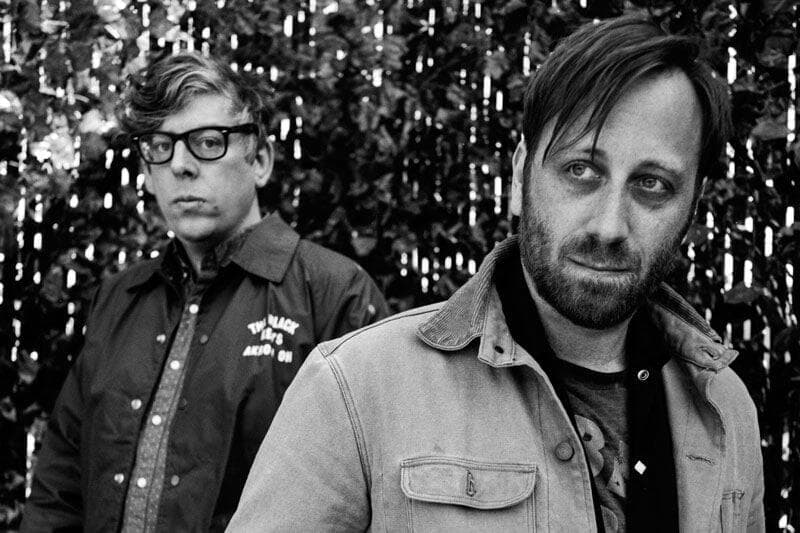
The two musicians kept jamming right up until they graduated. Afterwards they attended the University of Akron for a while, but dropped out in 2002. This marked the creation of Black Keys, whose name also has quite a story behind it.
Black Keys: The ‘Black Keys’ that aren't all there
The name is both strange and distinctive! According to the members, though, it comes from an expression used by a fellow student of Dan and Patrick's at the University of Akron. That student was a schizophrenic artist who used the phrase ‘Black Keys’ to describe people who ‘weren't quite all there’!

Every beginning is hard, and Black Keys learned that the hard way. While they were trying to get the band off the ground, they mowed lawns to keep themselves afloat financially. Their success, though, was almost instant. The first release from Black Keys, in 2002 titled ‘The Big Come Up’, came out on the Alive label. Audiences loved it right away. Using blues as their foundation, the band managed to modernise it and serve it up to us in a very appealing form. What made a particular impression was the fact that the duo played without any other instruments. This stripped-down approach sounded so fresh and so new.
A full circle and the return
The albums that made Black Keys famous were ‘Brothers’ and ‘El Camino’. These certainly had roots in blues music, but they also had a more commercial, more pop form. At the start of their career, of course, things were very different. Their basic style was much closer to the roots of classic blues, and rather hardcore at that, since it only involved guitar and drums. The follow-up to ‘Brothers’ and ‘El Camino’ brought the band face to face with decisions. Bringing in additional musicians (even if they mainly took part in tours and shows) became the only way forward. The result was the album ‘Turn Blue’, which was clearly more atmospheric.

‘Delta Kream’ marks the return of Black Keys to the roots of blues. The style is pulled straight out of the Mississippi Delta, and the music is a blend of old and modern. Musically, we get repeating patterns, bass and drums following along with understated rhythms, and the voice driving the track forward. The guitar tones are compressed and overdriven, yet keep a clarity in their notes. The band brings other instruments into play as well, like harmonicas, bolstering the vocal sections.
Listening to the album feels like being inside a recording session that never stops. Between the tracks, we hear various instructions and comments from the people involved. This gives the sense that we're listening to unedited tapes and makes the result feel more earthy, without the slightest compromise to the sound and music quality. Vocally, Dan has his well-known style that harks back to Delta Blues.
Editor's Choice: ‘Crawling Kingsnake’
This track is the opening kick of the album. Right at the start, the sound engineer can be heard asking Dan if he's ready (‘Ready?!’). Along with him, listeners feel ready to set off on this journey down the muddy paths of the Delta. Its slow, seductive rhythm and the song's repeating central riff push you to move. Suddenly, we too find ourselves in the wooden, dark Juke Joints of the South, savouring this new generation of blues.
‘Well I'm a crawling king snake, baby
Crawl up on your door
Crawl up to your window, baby
Crawl up on your floor
I do anything I want to, baby
Crawl up on your door
Crawling king snake
And I'm going'
‘Delta Kream’: An album that ‘screams’ blues

It's clear that die-hard fans of classic Delta blues music will be in raptures over ‘Delta Kream’. The album ‘reeks’ of the blues! It's an excellent example of the genre's evolution, without becoming some different offshoot of music. Over the years, we've seen many genres draw inspiration from the music of Robert Johnson and his crew, but far fewer that actually evolve the genre. I'll admit that Black Keys pull it off completely. You feel like you're listening to something classic, but not dusty or dated. The one certain thing is that the band, in going on this musical exploration, returned to the music it actually wants to make, and that gives new life to their songs.