


Rupert Neve: The engineer who changed the sound
His gear became the industry standard and shaped the sound of bands like Nirvana, Fleetwood Mac, Grateful Dead, Santana, Chicago and the Who. We're talking about Rupert Neve, the engineer who changed the sound. 1991.
By Dimitris (Bari) Polyzois
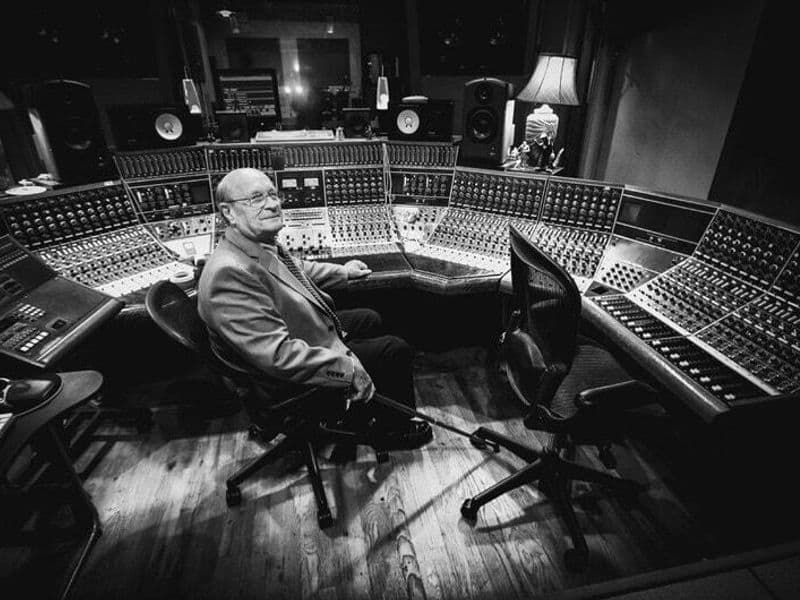
Sound City Studios in Van Nuys, California. Nirvana, the grunge band from Seattle, is recording its groundbreaking album, "Nevermind". Inside the booth sits a massive mixing console built by a British engineer named Rupert Neve.
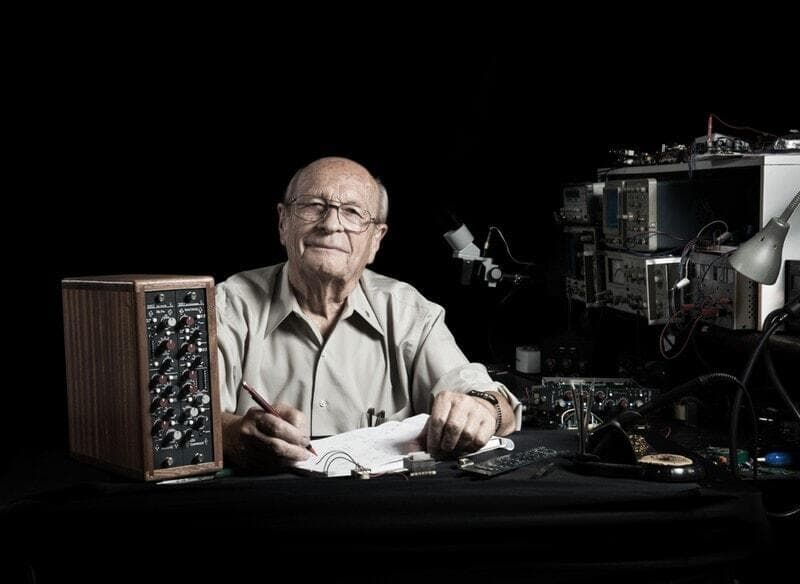
The Neve 8028 console, along with many others he built at the time, had become essential studio gear. Many singled it out as the finest console of its kind for handling and blending instrumental and vocal signals. It was largely responsible for the sound quality of albums by groups like Fleetwood Mac, Tom Petty and the Heartbreakers, Grateful Dead and Pink Floyd.
For Dave Grohl, drummer of Nirvana and later frontman of Foo Fighters, the console "was like the coolest toy in the world." "And what you get when you record on a Neve board is this incredibly accurate and warm representation of the real sound"
"What comes out the other end is the biggest, best version of you."
In 2011, long after starting Foo Fighters, Mr. Grohl bought the console when Sound City was closing down. He took it to his garage and used it to record the band's album "Wasting Light".
Neve's innovative, largely analog gear has been used to record pop, rock, jazz and rap. Notably, all of these differ from his personal favourite: English cathedral music, with organs and choirs.
Following his death on February 12, 2021, hip hop engineer Gimel Keaton, known as Young Guru, wrote on Twitter: "Please understand that this man was one of a kind. There's nothing close to him in the engineering world. RIP to the KING !!! "
Mr. Neve (pronounced Neeve) died at a hospital in San Marcos, Tex., near his home in Wimberley, a Hill Country town he and his wife, Evelyn, moved to in 1994. He was 94. The causes were pneumonia and heart failure, according to his company, Rupert Neve Designs.
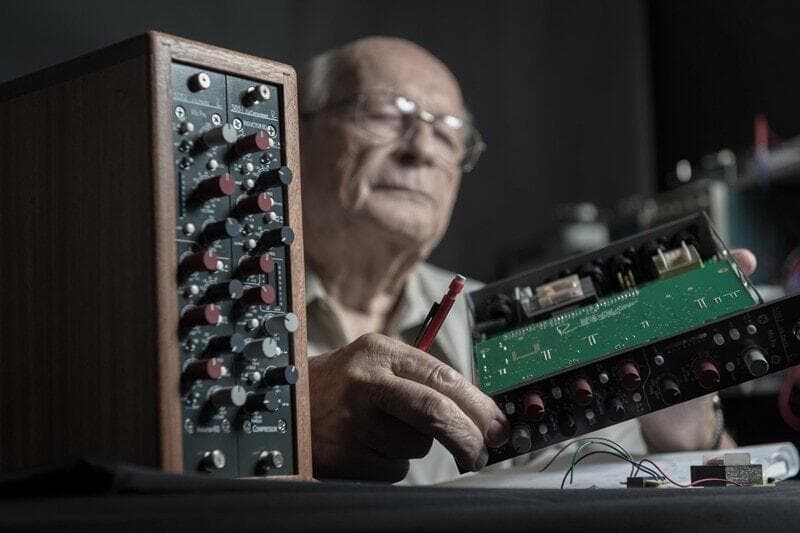
His Story
Arthur Rupert Neve was born on July 31, 1926, in Newton Abbott, in southwest England. He spent most of his childhood near Buenos Aires, where his parents, Arthur Osmond and Doris (Dence) Neve, were missionaries for the British and Foreign Bible Society.
Rupert developed a special bond with technology as a boy taking apart and fixing radios. That love only deepened during World War II, when he served in the Royal Corps of Signals, which provided communications support to the British Army.
After the war, working out of an old U.S. Army ambulance, he launched a professional recording business, cutting acetate 78-rpm discs. He recorded choirs, as well as public speeches, such as those of Winston Churchill and Queen Elizabeth II, back when she was still a princess.
His future father-in-law wasn't impressed. When Mr. Neve asked to marry his daughter, Evelyn Collier, the older man couldn't fathom recording as a way of life.
"He'd never heard of it," Mr. Neve told Tape Op, a recording magazine, in 2001. "To him a recorder was a gentleman sitting in a courtroom writing down the proceedings".
During the 1950s, Mr. Neve found work at a company that designed and built transformers. He also started his own business making hi-fi equipment.
With his growing knowledge of electronics, he recognized that mixing consoles performed better with transistors than with vacuum tubes, which were cumbersome and required very high voltage.
He delivered his first custom transistor console to Phillips Studios in London in 1964, and its success led to thousands more orders over the years. They were purchased, among others, by Abbey Road Studios in London, the power generating station in Manhattan, and AIR Studios, both in London and on the Caribbean island of Montserrat, founded by George Martin, producer of the Beatles.
Singer-songwriter Billy Crockett bought a Neve console about eight years ago. He set it up at Blue Rock Artist Ranch & Studio, also located in Wimberley. It quickly enriched his "warm, open, transparent" sound.
"It's all about his transformers," he said in a phone interview. He was referring to the components Mr. Neve designed that connect microphone signals to the console and the console to a recording medium such as vinyl or CD. "They provide something intangible that makes the mix click. That's how the sound gets shaped through the transformers."
Mr. Neve received a Technical Grammy Award in 1997. In a 2014 interview with the Recording Academy, he said he was pleased with the loyalty his consoles had built.
"I'm proud of the fact that people are still using my designs from many years back. In many ways, the models haven't been replaced since," he said. "Some of these old consoles are really hard to beat both for recording quality and for the effects they offer during recording sessions."
Besides his wife, Mr. Neve is survived by his daughters, Evelyn Neve, known as Mary, and Ann Yates; and his sons, David, John and Stephane.
Mr. Neve knew the engineers who operated his consoles better than he knew the singers and bands whose albums benefited from his sonic magic.
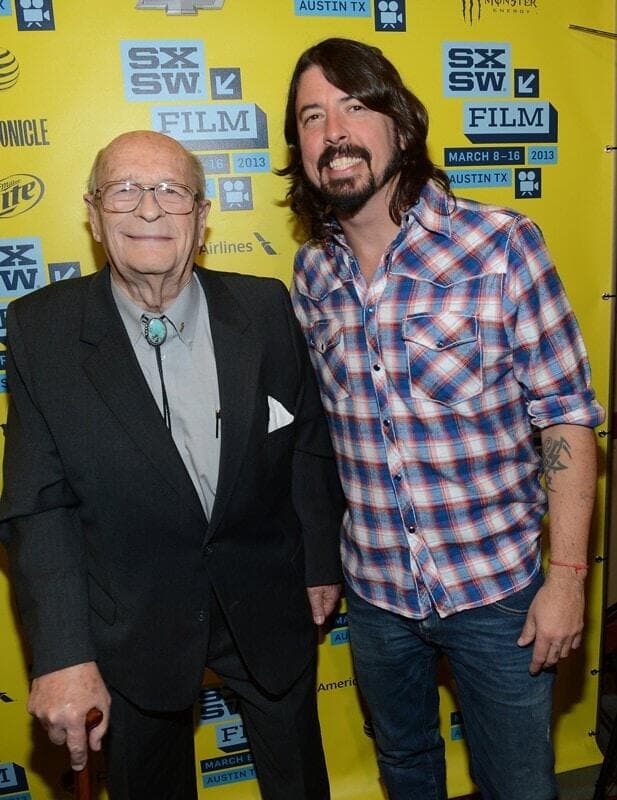
That preference was confirmed when rock stars approached him after the screening of Mr. Grohl's documentary "Sound City". At the SXSW Film Festival in Austin in 2013 he was the guest of honour.
"Everyone wanted to take pictures with him," said Josh Thomas, general manager of Rupert Neve Designs, in a phone interview. "And after every photo, he'd ask me, 'Who's that?'"