


Pentesilea Road: 'The subject matter is autobiographical.'
Time to meet Pentiselea Road! Following the arrival of their self-titled record, the band from Italy reveals itself to us. Come and meet Pentesilea Road! The band, after their self-titled album, opens up to us exclusively on Fuzzy Hound! Welcome to Fuzzy Hound!
By Dimitris (Bari) Polyzois
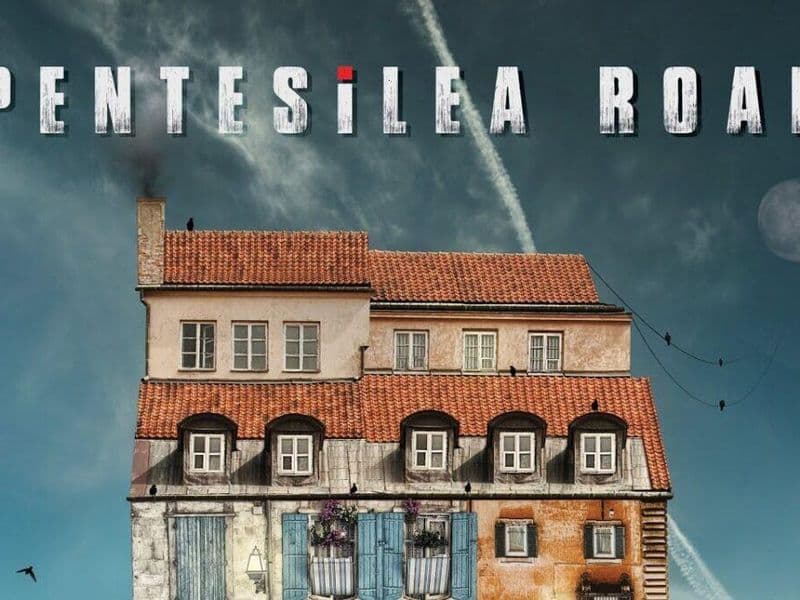
Come and meet Pentesilea Road! The band, after their self-titled album, open up to us exclusively on Fuzzy Hound!
Welcome to Fuzzy Hound! It's a great pleasure to talk to you. You've just released your first album, titled 'Pentesilea Road'. Tell me your feelings about this record. Has it gotten the recognition you thought it would?
'Hi! Thank you first of all for the time you're giving us! We're really very happy with the final result, but it's quite hard to discuss expectations. Before this album we'd never released anything under this name and the band was completely unknown. Still, the album has sold copies all over Europe and America, not to mention streaming. We can't help but be very satisfied with that!'
I'd like to know the motivation behind this album. When did you create these songs and by what criteria did you choose them?
'This first album has a strange story: before the recordings, a few months before the album's release, there wasn't actually a real band. Originally, my idea was to release just one album, where I'd handle everything myself… Luckily, I got the chance to work with Mark, so I changed course and started looking for musicians for the recordings and opted for a professional production. That means the motivation behind the choice of themes is very personal: in many ways it's purely autobiographical. Calvino's "Invisible Cities" is a pretext accompanying the narrative.‘
'I love Calvino's "Invisible Cities" — the chapter on the city of Pentesilea is my favourite. Pentesilea, in the album's philosophy, is the archetype of postmodern society: hyper-connected and vaguely dystopian. It was a way of metaphorically dealing with my sense of unease about the condition of the stateless. Pentesilea is the city with undefined borders, so it's impossible to get out of it, but it's also unlikely to be a real part of it. To me it's a perfect description of the global village: post-sovereign, post-ideological, post-human.'
'I liked presenting the album as steeped in a philosophy of rebellion against the postmodern world of surveillance capitalism, fast-food, and enforced conformity. A "disrespectful act of rebellion against the intimidating power of political correctness", as one track puts it. I remember that, at the end of the day, rock was protest, so…'
'As for the timing, almost all the tracks are fairly recent, except perhaps three tracks (Shades, Genius Loci and Spectral Regrowth) which were written at least a decade ago. Still, all the material has been rearranged to gain musical continuity and a more mature flavour, let's say.'
As a group, you have an exceptional story. Why did you choose to wait 6 years to finish your first album?
'Το Pentesilea Road is a project I've been carrying on alone since 2014 (back then I was in the UK for work reasons) up until the moment it was time to record the first album. During those years I recorded and posted several demos on my SoundCloud, but nothing official. The basic idea was to search overall for unusual musical solutions, while retaining influences from the world of progressive metal and post-rock. Over the years I tried to put together a real band, but nothing ever came of it, or at least the fateful alchemical reaction never happened.'
'At the start of last year I decided to gather up some of the material I'd created over the previous years and to record and produce an album basically on my own, possibly with the help of a singer — at least that was the original idea. When the chance came up to work with Mark Zonder, I completely shifted my focus and last summer I hired professionals to record the actual album. On this debut album, I had the chance to work with some great artists: in fact, I'm the only one in the project who isn't a professional musician, I've got other things going on in my life.'
'I can't help but feel honoured to have had this opportunity, from which I learned so much. In the past I've played with many bands, in Italy, the UK, and the Netherlands (countries where I ended up living for work reasons), both as a guitarist and bassist, in cover bands or musical projects where I didn't have an active role in composition. Still, my main interest, artistically speaking, has always been composing.
That's how Pentesilea Road was born and the album came out this year!'
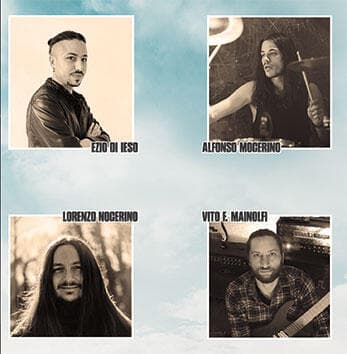
Your music spans a variety of styles. Post-Rock, Instrumental, Progressive Rock and Metal. Can you tell us about the influences behind this style choice? Does it have to do with your own particular musical character?
'Let's just say the various musicians have different influences: they're professionals with a very broad technical background. Rock is a common denominator for all of us. As for me, what you're saying is right: I come from progressive metal, maybe the less hyper-technical but more elegant genre. I also have post-rock influences, which can be spotted here and there on the album…'
Speaking of inspiration, can you point out any artists or bands you've drawn from?
'Look, I started very early: I've been listening to metal for more than three decades… like everyone else, I've gone through various phases… classic metal, power metal, progressive and, more recently, post-rock. You could say every band I've ever listened to has left something in my musical baggage. To name a few, I'd say Fates Warning, Queensryche, Iron Maiden, Dream Theater, Opeth, Porcupine Tree, Savatage, Riverside, PFM, Russian Circles, Pain of Salvation… so many bands!'
You've created something unique. Please, it would be nice to know your opinion on music in Italy (rock and beyond) and Europe more broadly. I mean, in Europe or the US, don't they look down on countries like Italy or Greece in the music industry? What do you think?
'Thanks for the compliment! Honestly, I don't know much about recent Italian or Greek music… the golden age of Italian music belongs to the past: the classical tradition, of course, but I have to say that before 2000 there was still very good music around. At present, and I say this with sadness, there doesn't seem to be much. Let's just say I'm not a big fan of trap music, that's all…
Generally, I think the main issue is marketing: music increasingly resembles a consumer product, which has to stick to precise standards. With Pentesilea we tried to give it a different feel: long songs, not straightforward… we had total freedom in composing, mainly because we don't have a label. When you have to respect standards, you're forced to limit yourself… that's something I often see on the European scenes.'
As for your name, you chose a title from a book by Italo Calvino. First of all, why "Invisible Cities"? Is there some backstory to choosing this book? Also, why "Pentesilea Road" and not something else?
'I love Calvino's "Invisible Cities" — the chapter on the city of Pentesilea is my favourite. Pentesilea, in the album's philosophy, is the archetype of postmodern society: hyper-connected and vaguely dystopian. It was a way of metaphorically dealing with my sense of unease about the condition of the stateless. Pentesilea is the city with undefined borders, so it's impossible to get out of it, but it's also unlikely to be a real part of it. To me it's a perfect description of the global village: post-sovereign, post-ideological, post-human.'
'I liked presenting the album as steeped in a philosophy of rebellion against the postmodern world of surveillance capitalism, fast-food, and enforced conformity. A "disrespectful act of rebellion against the intimidating power of political correctness", as one track puts it. I understand the theme might seem hostile, but I remember that this was originally what rock was about: an act of protest.'
Is there any specific method you usually follow to create songs? What's the best and easiest method of creation?
'It's hard to answer that in general terms: I suppose every musician has their own compositional process.
As for my own approach, I don't really have a precise method. I'm an instinctive composer and I think that's also down to the fact that I don't have the academic background, musically speaking, that my colleagues have. Broadly speaking, I go by the feeling I want to convey: sometimes it all starts with a riff, either guitar or bass. Sometimes I start with the piano or, for certain rhythmic quirks, with the drums. The vocal line always comes last for me.'
'Lyrics, on the other hand, I always leave until almost the very end: for me it's important to give a logical and chronological continuity between the various songs. With a few exceptions that prove the rule, as in the case of 'Shades of the Night', which is a track by Circle of Believers, the band I'd already played in with Ezio a few years back.'
The pandemic situation has created a lot of problems for artists all over the world. How did you deal with this situation? How did you overcome the difficulties?
'Since we've only just started out, we haven't had to face the issue of playing Live yet, so from that point of view not much has changed for us… of course, I really miss going to shows as an audience member, obviously! I imagine it was more complicated for the other guys… they play in other bands and last year we played very little.'
As for the difficulties, you made this album while being in different countries. That seems really tough. From the results it looks like this method worked, at least for you? How did you do it? Could this method be the only way to create going forward (because of the pandemic)? What are the positives and the negatives?
'For this album, there was a long and complicated coordination between the various musicians. I was in charge of acting as the hub for processing the various parts the rest of the band was recording. We're spread across 4 different countries and 2 different continents!
Luckily the reference given to the rest of the band was quite specific and very close to the final version of the record. Freedom of initiative was always welcome, but due to time constraints (caused by the mixing and mastering sessions) we only made marginal deviations, maybe except for the keys and piano, where there were substantial changes. The choice of Hammonds and vintage sounds on the keys is down entirely to Ezio.'
'I really enjoyed working with Ezio and Alfonso and I can confirm, ahead of time, that both have agreed to become part of the band: we've already started working together on the second album!'
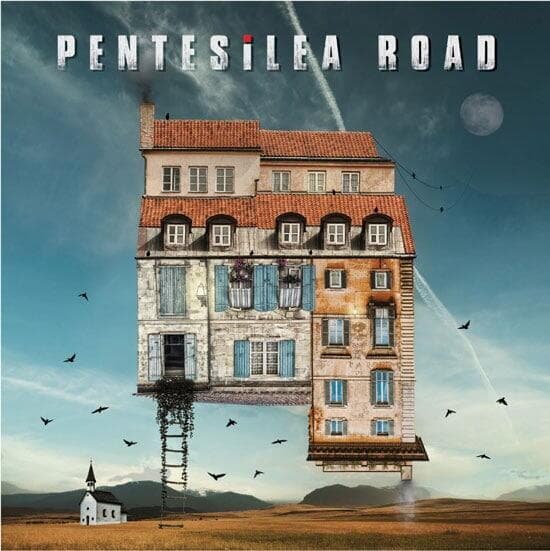
Are Pentesilea Road going to take part in any concerts? Now that the situation is improving, are there any plans for a live show? Also, could we expect you in Greece, where the audience is always eager to discover new styles of music?
'Absolutely. We'd love to do live shows, but that'll be to support the next album. Music aside, Greece is top of my list for a visit!'
When can we expect the next album?
'I think next year: with Ezio and Alfonso we've started working on the new album and we're pretty far along — in any case we like to work slowly… the project is complex and needs its time.'
Guys, thanks for your time. I wish you good luck and I'm looking forward to your next albums and the chance to see you live in Greece! You can close out this interview however you like!
'Thank you very much. Almost all of us come from Southern Italy, Magna Grecia. We owe a lot to Greek culture, as does the rest of the world: classical philosophy, architectural taste, the very concept of democracy. There's an unbreakable bond of blood and culture with the Greek people.
I'd like to renew that bond with a friendly people with a virtual hug. Thank you very much!‘