



Review: Epiphone Inspired by Gibson ES-335
Following in the footsteps of the excellent 2020 Solidbodies Inspired By Gibson series, Epiphone turns its attention to the mighty ES-335 The addition of Semi-hollow and acoustic models to Epiphone's Inspired By Gibson series is inevitable and welcome.
By Dimitris (Bari) Polyzois
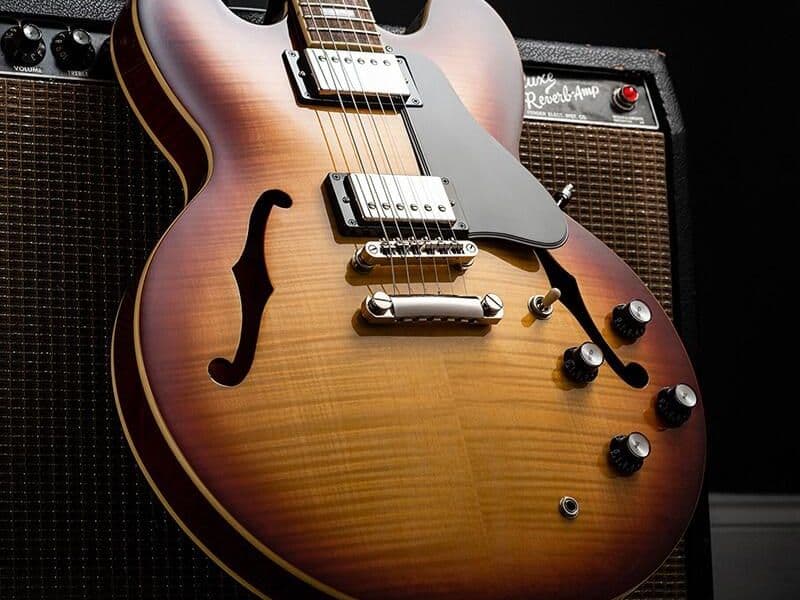
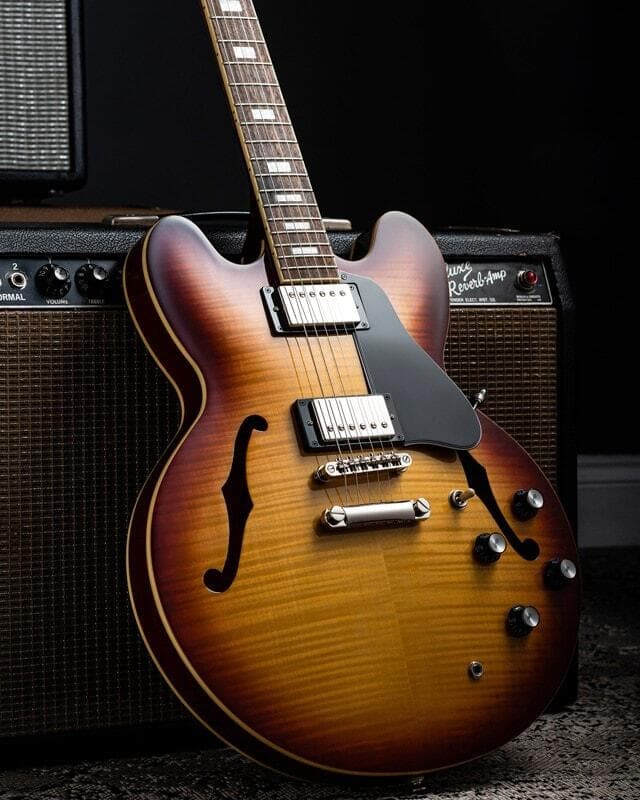
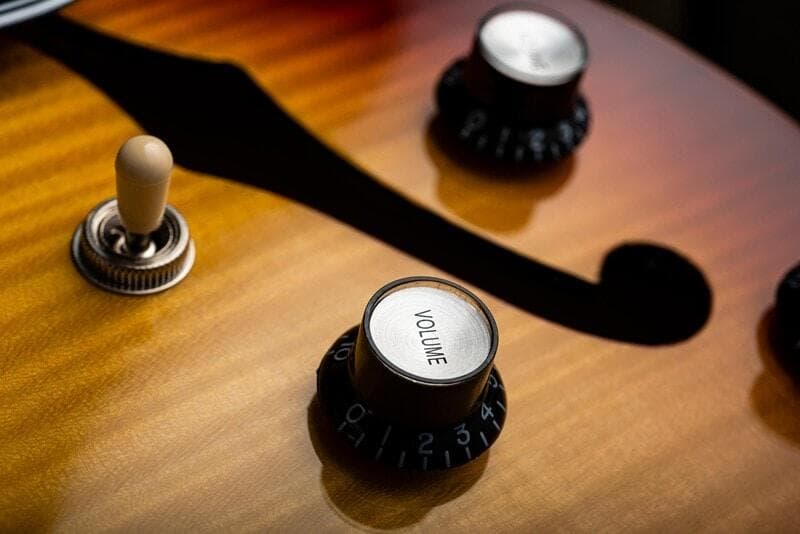
It's all about the Gibson look and feel at an affordable price. Alongside the Solidbodies Inspired By Gibson, the ES-335 features the classic Kalamazoo headstock shape and CTS pots. The impressive Flamed Maple on the front and back highlights the quality of the ES-335 Figured model. Simple dot inlays are also formed on the fretboard.
This is an ES-335 that deserves a lot of credit for the quality of its finish. We particularly like the smooth transition from "raspberry" colour to amber. Also, the flamed maple veneer looks lovely on both the front and back of the instrument. Keeping the shading at the edges of the body under control is very much an Epiphone trademark. The Gibson inspiration here isn't limited to just a teardrop burst, though. You'll also find it in Blueberry Burst colour, as well as in Vintage Sunburst incarnations.
We were obliged to point out a few spots on the binding that weren't flawless. Things are admittedly a bit better on the back than on the front. However, in some places the binding is so thin it's almost invisible. It's a shame because in every other respect the binding on the body and neck fits together very well. The body – and especially those Mickey Mouse ears! – would look even better with a more sharply defined outline.
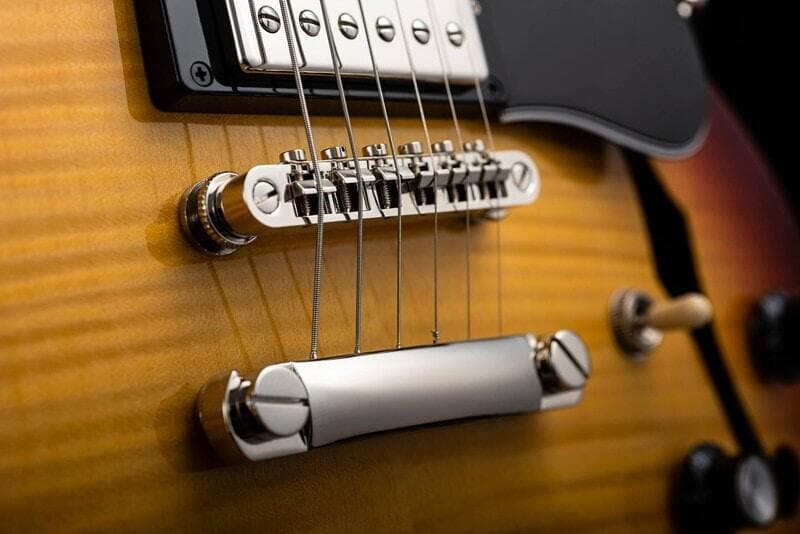
The Locktone Tune-o-Matic Bridge and the Stop Bar Tailpiece are Nickel-plated. Very simple and precise to set up.
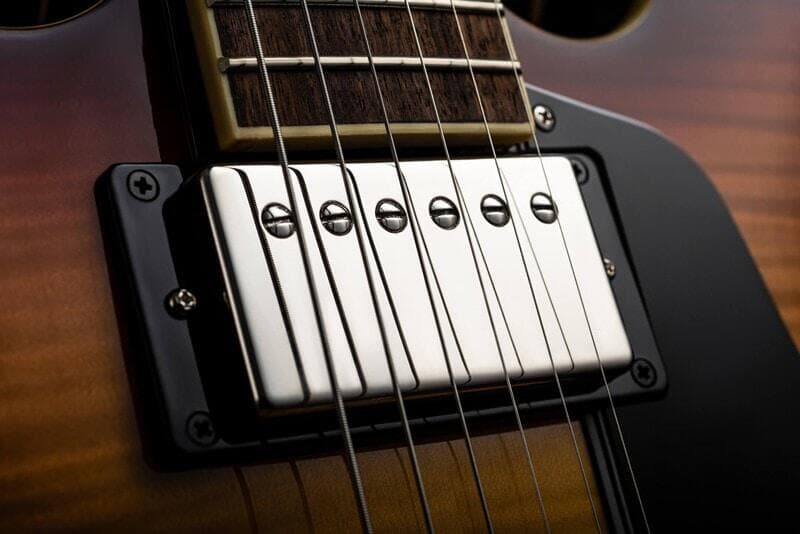
Epiphone's LockTone Tune-o-matic bridge and the Stop Bar Tailpiece are Nickel-plated. The bridge adjusts easily thanks to the screwdriver slots at its ends. The covers on the Alnico Classic Pro humbuckers fit perfectly and are mounted on black rings to prevent resonance.
The spot where the Bridge humbucker sits looks great. However, the ring around the Neck humbucker is unusually shallow, with no more than 2 mm of room for adjustment. As a result, the Neck humbucker sits at a very extreme angle relative to the strings, leaving the cover a few millimetres lower on the neck side.
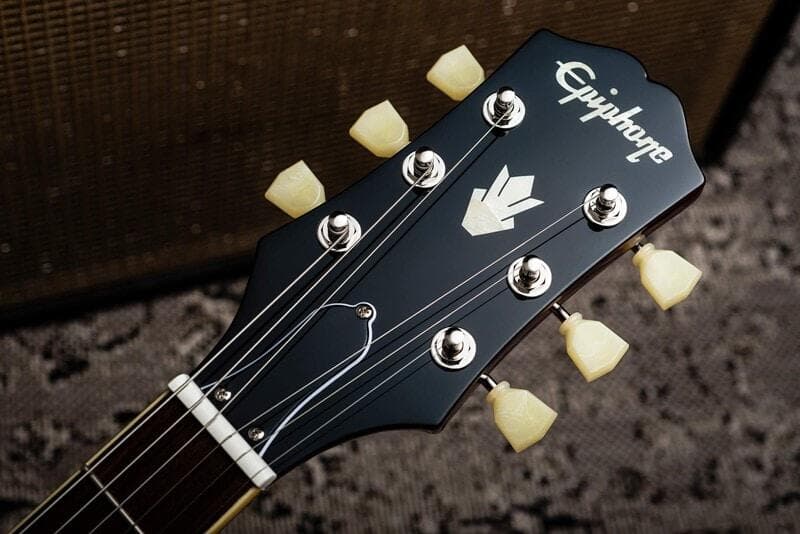
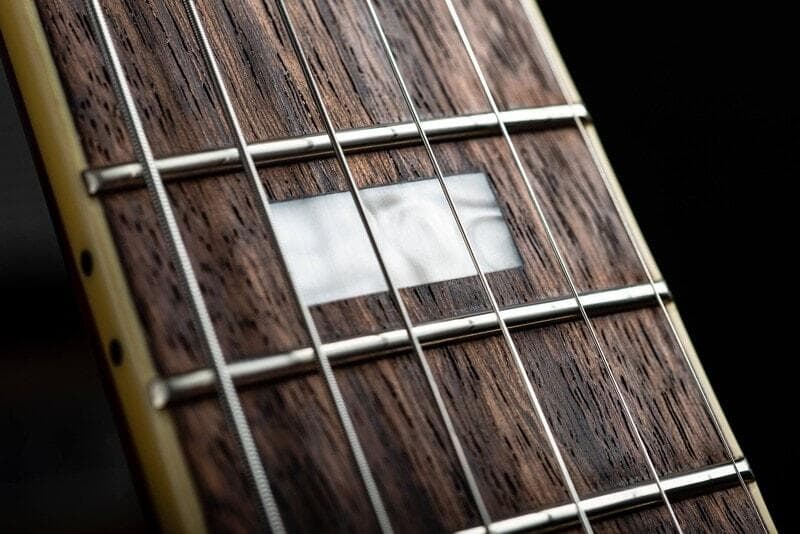
The aforementioned headstock features Epiphone's classic inlay and vintage Kluson-style tuners. There's no arguing with the attractive Indian laurel fretboard, and the inlays have been placed perfectly. The fretwork is equally impressive, and we'd describe the fretwire as "medium jumbo." More specifically, tall vintage with minimal extra width.
The neck isn't particularly deep, but it's rounded enough to fill the hand and feels quite chunky. Overall, the guitar has a solid feel and, despite the weight of the neck, balances beautifully whether you're playing seated – as most of us are these days – or standing.
In Use
The instrument's unplugged tone is bright and rings out clearly with plenty of sustain. That said, the overall sound and dynamic response feel more like a punchy solid body than a vintage semi-hollow. The mellowness of the wood you'd expect to hear from an ES-335 isn't particularly evident, and the neck profile doesn't feel old-school. Put simply, it's a vintage instrument with modern elements. Still, the playability is excellent. The fretwire is well chosen. Lastly, the tuning stability is very solid.
Plugging into the amp, the previously vague ES-335 tone finally emerges. The pickups are extremely clear and very responsive. They have plenty of power without going overboard, and each of the three settings (Neck, Middle & Bridge position) sounds distinct.
Starting with the neck position, the tone is vocal, rounded and sweet, but also pleasantly well-defined even in the low frequencies. By contrast, the bridge position offers a convincingly vintage midrange, a biting feel, and a touch of twang to balance out the instrument's grunt.
For many ES-335 players, the middle setting is where much of the magic lies. Here, Epiphone treats us to a funky phasiness with a more compressed response. It's a wonderful rhythm sound and ideal for chord arpeggio textures. All of this is bolstered by controls that offer plenty of usable range.
For many ES-335 players, the middle setting is where much of the magic lies
Overdriven sounds can be cleaned up simply by using the volume pot, just as you would with a vintage Gibson. You can roll back the Neck pickup's volume to add an interesting twist to the middle setting and hit what's often called the "quack spot." This delivers vocal, expressive tones for soloing and also offers a fuller alternative for Bridge-Rhythm sounds within a band. As for the pots, they roll off evenly and smoothly, proving useful across their whole range rather than just a narrow band at the bottom.
We were massively impressed by all three solidbodies in Epiphone's Inspired By Gibson series that we reviewed back in early 2020. The weight, the neck profiles and the finishes were all that good. All three were just one set of pickups and a hardware upgrade away from going toe-to-toe with their Gibson counterparts.
A guitar with tremendous energy and top-quality construction. So much so that it can go up against pricier models.
It shows a slightly smaller acoustic character than the one that sets ES-335s apart. This may have to do with the relative complexity of semi-hollow construction. In any case, all of that is quickly forgotten once it's plugged into an amp.
The neck carve perhaps doesn't fit this model quite as well as the profiles did on the Epiphone solidbodies we saw last year. Also, we prefer the teardrop burst colour to the sunburst, but the latter is purely an aesthetic preference. It's a thoroughly enjoyable guitar with build quality and finish that exceed expectations at this fiercely competitive price point.