


A look at Plini's Impulse Voices
The well-known Australian guitarist talks to us about his latest album, Impluse Voice, as well as the sounds he chooses on it. Orchestral music is a very specialized art style. Prog rock / metal is unquestionably just as specialized as a form of musical expression….
By Dimitris (Bari) Polyzois
So, organic prog is as far to the left edge of the musical subsystem as you can get before stepping into truly weird and experimental styles. Impulse Voices will give you just such an experience.
Generally speaking, this genre has grown a lot in recent years. It was built on the back of wonderful and diverse artists like Animals as Leaders, the sleepmakeswaves, the Scale the Summit, the Russian Circles, the Intervals, the David Maxim Micic, the I Built the Sky and many more. It has grown to such a point that many of these artists make a living writing, recording and touring their music, or selling merch.
The style of this music to such a point that many of these artists make a living writing, recording and touring their music, or selling merch.
Fans have grown in numbers, as have the visits, views and streams on Youtube, Spotify, Bandcamp and similar platforms. Organic prog rock and metal artists are touring the world (before Covid-19 anyway) and doing it exceptionally well.
One of the artists right at the very forefront of this global movement is the Australian Plini. The guitar wonder from Sydney has just released his second album, Impulse Voices. Through an interview he gave us, we'll break down this record, going into detail about the thinking and inspirations behind the creation of this most eclectic and thrilling collection of progressive instrumental songs.

The 'I'll Tell You Someday' opens the album in cathartic fashion. From its ambient beginnings, it builds into a sweeping, majestic epic that truly sends shivers down the listener's spine. Plini's lead lines ripple and fill the track with melody. It is without a doubt the best part of the album.
The most recent single "Papellilo" is a bit more blue, a bit more laid-back, a bit more groove-based. It still very much stays within Plini's true style though.
Plini: I had a conversation with a friend during the writing process, about the role the people you know will play in the rest of your life. I said, "what do you think my role will be in the rest of your life?", and he said, "I'll tell you someday." I thought that was one of the most chill things I'd ever heard (laughs).
I think it fits the feeling of the song exactly, it's quite warm but also kind of strange. I thought that most of my song titles are clearly "prog" song titles. Somewhat abstract or scientific. That's exactly why I chose this title for the record too.
Another influence was this old composer called Les Baxter. I just wanted to bring in some of those exotic tonal elements.
Plini: The track starts with the riff that repeats through the first two minutes. Right away I had the idea that I wanted to do something with Snarky Puppy influences. It didn't necessarily end up that way. But I imagined it would be this fairly repetitive rhythm section with lots of different things filling in around it, like a big band was playing it.
And then another influence was this old composer called Les Baxter. A lot of his stuff has a similar atmosphere. Tracks that would be the soundtrack to adventure movies before Indiana Jones, back when traveling the world was still pretty exotic. I just wanted to bring in some of those exotic tonal elements.
The title was on my list of possible song titles. I was walking a lot, and a lot of people seem to have the bougainvillea flower and I really wanted to call a song "Bougainvillea." As you know, being Australian, the "bogan" part of it isn't very flattering. There's a stigma attached to that word, even though it has nothing to do with the flower. So I did a Wikipedia search and found that "papellilo" is the Peruvian-Spanish name for the same flower. And then, several Spanish fans pointed out that this is also the name of a type of paper used when rolling a cigarette!
"Perfume" retains the swirling atmosphere that "Papellilo" created, though it adds a slightly more eerie and experimental vibe. It might be the eeriest track on Impulse Voices.
Plini: It was the first song I sent to my drummer Chris. I liked how it sounded thematically, but I hated how it sounded rhythm-wise, the way I'd programmed it. It was some kind of Plini disco. So I sent it to him and said:
"I really like this, but I also hate it, can you come up with something a bit weird to help me fall for it again? He sent me about eight different tracks and I ended up picking one of them. It's that hi-hat pattern that makes it stand out.
I think it's the creepiest track on the album. It's harmonic, and that's where its name came from.
A quiet piano intro announces the arrival of "Last Call," another bluesy groove exploration. Again, the chord choices are extremely tasteful. That's what sends the track soaring.
Plini: "Last Call" was almost the album title. I was just thinking about recent experiences and feelings I've had over the past few years. I always like to take a trip at the end of a tour, so I'll stay in a city for a bit afterwards. That's the feeling I get when it ends and I go home. It's like I don't want it to end. Its melody is so melancholic. Like there's no positive outlook at all.
Something similar happens when you're at a bar having a great time and they call last drinks. You've got to feel good about the fun you've had up to that point and then close out the day. This song is one of the jazziest tracks on Impulse Voices. Maybe one of the jazziest songs I've ever written. It reminded me of New York. Going to jazz clubs, that kind of thing. So that's how the title connects to the song.
The title track features even more of Plini's renowned dynamics.
Plini: There's something funny or ironic about the shortest track being the title track of Impulse Voices. That helped. As for the title, I was listening to a psychology podcast, and they were talking about impulsive voices. They were the voices in your head from when you were a kid. Basically they drive you to do all the silly things you do as a kid, like eating dirt and playing with bugs. And as you grow up, adult life and seriousness drown out those voices.
So this title was like trying to re-strengthen those childlike instincts you have, especially with music. An adult eating dirt is probably less socially acceptable than having fun with music. It's something important, and it's something a lot of professional musicians shouldn't forget.
This song covers quite a lot of musical ground and seemed to fit that idea.
'Pan' introduces yet another new and different element into play. A sweet bluesy/jazzy saxophone that soothes and then explodes. There's a duel with the sharp guitar, as Plini proves he can shred. Another genuine gem on a monumental album.
Plini: It's a combination of Pan, the Greek god. I think he was the only god who had no motive to do great good or great evil. He was that cheeky rascal who was just having a good time.
And then I was watching this space documentary about Pan, Saturn's moon. I thought it's really a cute little moon. It's this tiny little thing out there hanging around Saturn.
So this song turned out to be the most djent track on the album. I think there's almost a stereotype of djent always being influenced by astronomy. That's why I thought I could go with that for this track.
"Ona / 1154" offers a laid-back breather between "Pan" and the closing track of Impulse Voices. And it does so in real style. The bluesy, noodling interplay between guitar and piano at the end is really sweet.
Plini: Ona is a café in Marrickville in Sydney that we went to while recording this song. If you look it up, it's a very serious place. My drummer Chris has a friend who works there. I think we each drank about five coffees. All different flavors, all served in different cups so we could taste the different flavors and all that.
I think the combination of being in the studio, drinking a ton of coffee, and having a good time — it was like I just had to name a song after that experience.
And then, 1154 is the name of an Italian restaurant in Wellington, New Zealand. The first and only time we played in Wellington was last year. It was incredible to play somewhere I'd never played before. It was one of those days where everything just clicked. Even though it was raining, it's a really beautiful city. So we went to this restaurant and it was such a lovely experience. I looked it up, and 1154 was apparently the year pasta was invented.
So coffee and pasta are two of my favorite things. I guess it's a shame to reveal that, but at the same time I don't think it bothers people. It sounds like a totally mysterious title, but I like where it comes from. From two of the simplest forms of food that exist.
Wanted a big finale? You got it. "The Glass Bead Game" is an absolute gem of Impulse Voices. It's nine minutes of build and dynamism that wraps things up beautifully and takes the listener on a journey through soundscapes that only this imaginative young artist could conceive and pull off.
Plini: I think because the song is so prog, it deserved a title like that. The Glass Bead Game is a book, which unfortunately I haven't read. It's actually been sitting on the bookshelf. I was planning to read it before finishing the album, so I could be more authentic, but I just didn't get to it. I read the blurb, and thematically it has a lot of ideas about society, general stuff that I'd like to think I'm trying to convey in a song like this. Even though I only write music for fun. It just seemed like a fitting title for a prog song. And that's kind of how Impulse Voices wraps up.



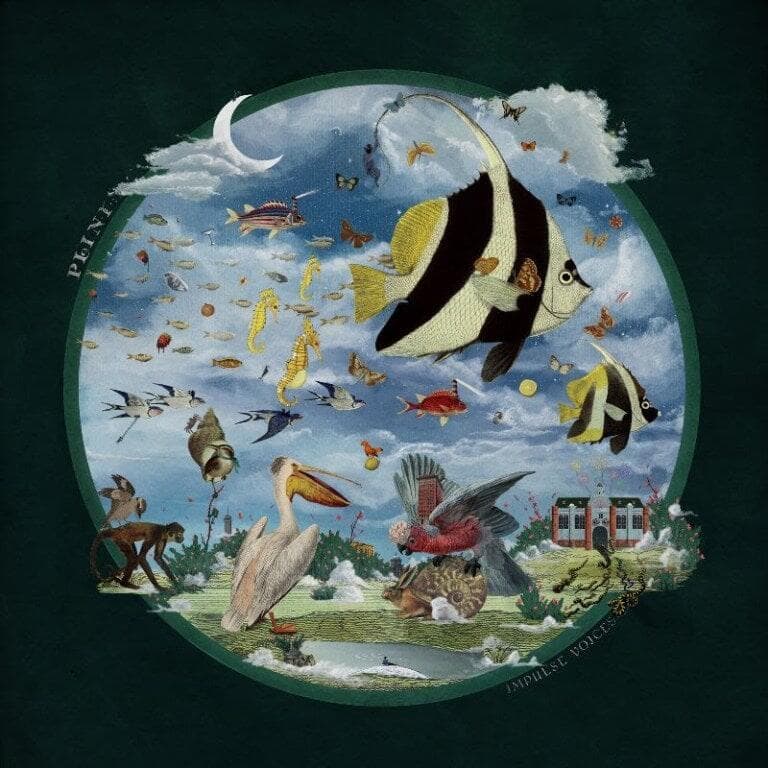
Plini – Impulse Voices tracklisting
1. I'll Tell You Someday
2. Papelillo
3. Perfume
4. Last Call
5. Impulse Voices
6. Pan
7. Ona / 1154
8. The Glass Bead Game